

The night the pitches weren’t pitching
Roots Africa’s team had flown in from the United States and Liberia, arriving in Uganda ahead of the next day’s Annual Symposium, Exhibition, and Pitch Competition. As part of the standard final checks, Roots Africa Inc Culture, People and Communications Lead Dough Onah, and then in-Country Coordinator for Uganda, Dennis T. sat down with the changemakers to make sure everyone was ready for the stage.
They were not ready! And it was going to be a long night that set a precedent none of us saw coming!


2024 pitch coaching session with Dough & Denis that became an SOP for Roots Africa Inc.
Not because they didn’t understand their ideas, they could explain their businesses fluently. They knew the problems they wanted to solve. They understood the farmers and communities they were building for.
But ask them to compress all of that into a tight, structured pitch, problem, solution, market, business model, competitive advantage, the ask, the close, and deliver it standing in front of judges in a matter of minutes?
Different skill entirely.
So the team got to work.
How do you open? What’s the one thing you need the judges to remember? Who actually pays for this, and why would they? How much do you need, and what happens if someone says yes? Where do your hands go? Where do your eyes go? How do you stop reading the slide and start talking to the room?
Three hours in, it felt like progress. It was past 11 p.m. The Symposium started early the next morning. They could have called it there.
Instead: “One more time. Pitch it.”
They tried. It still wasn’t there. So the team stayed another hour.
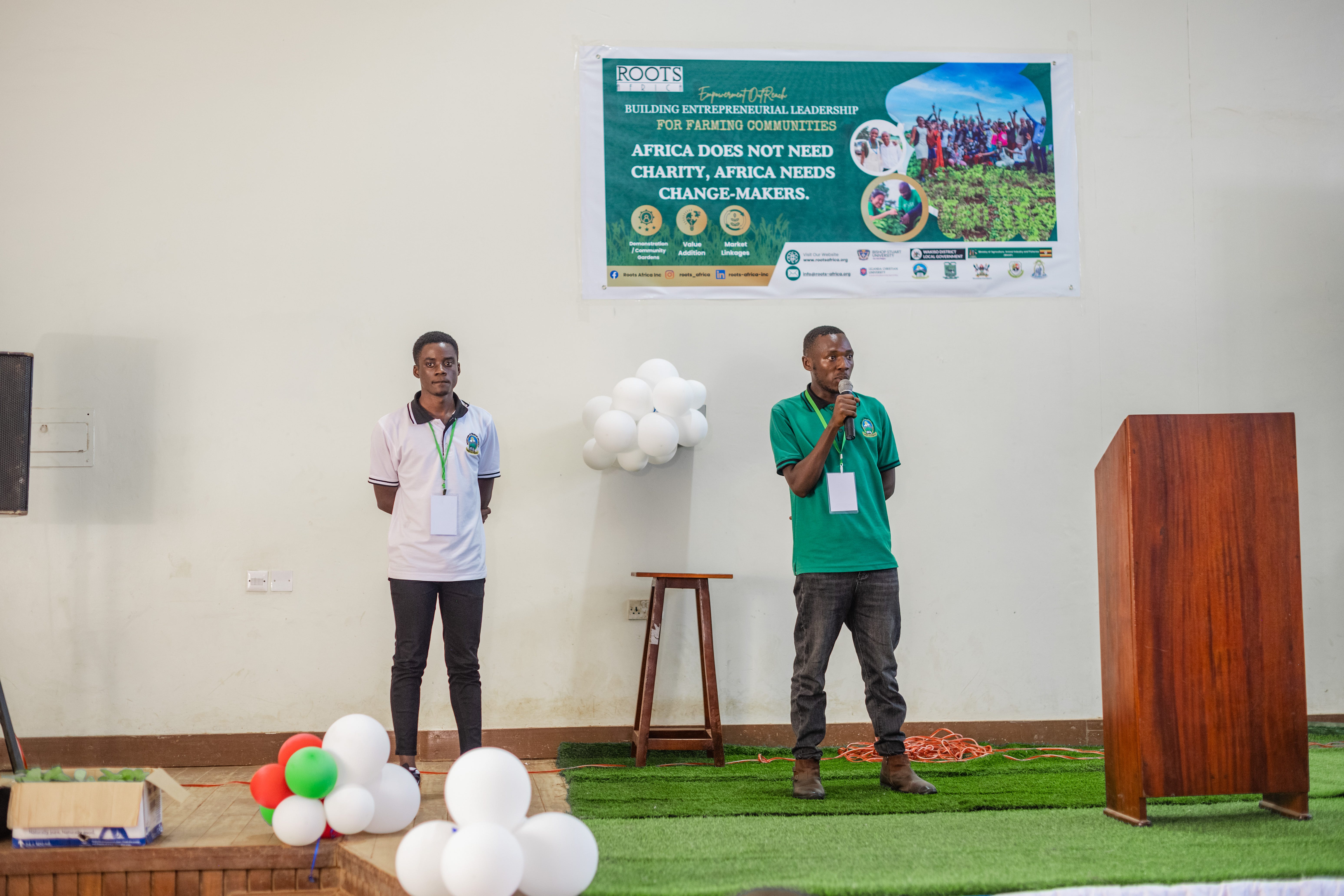
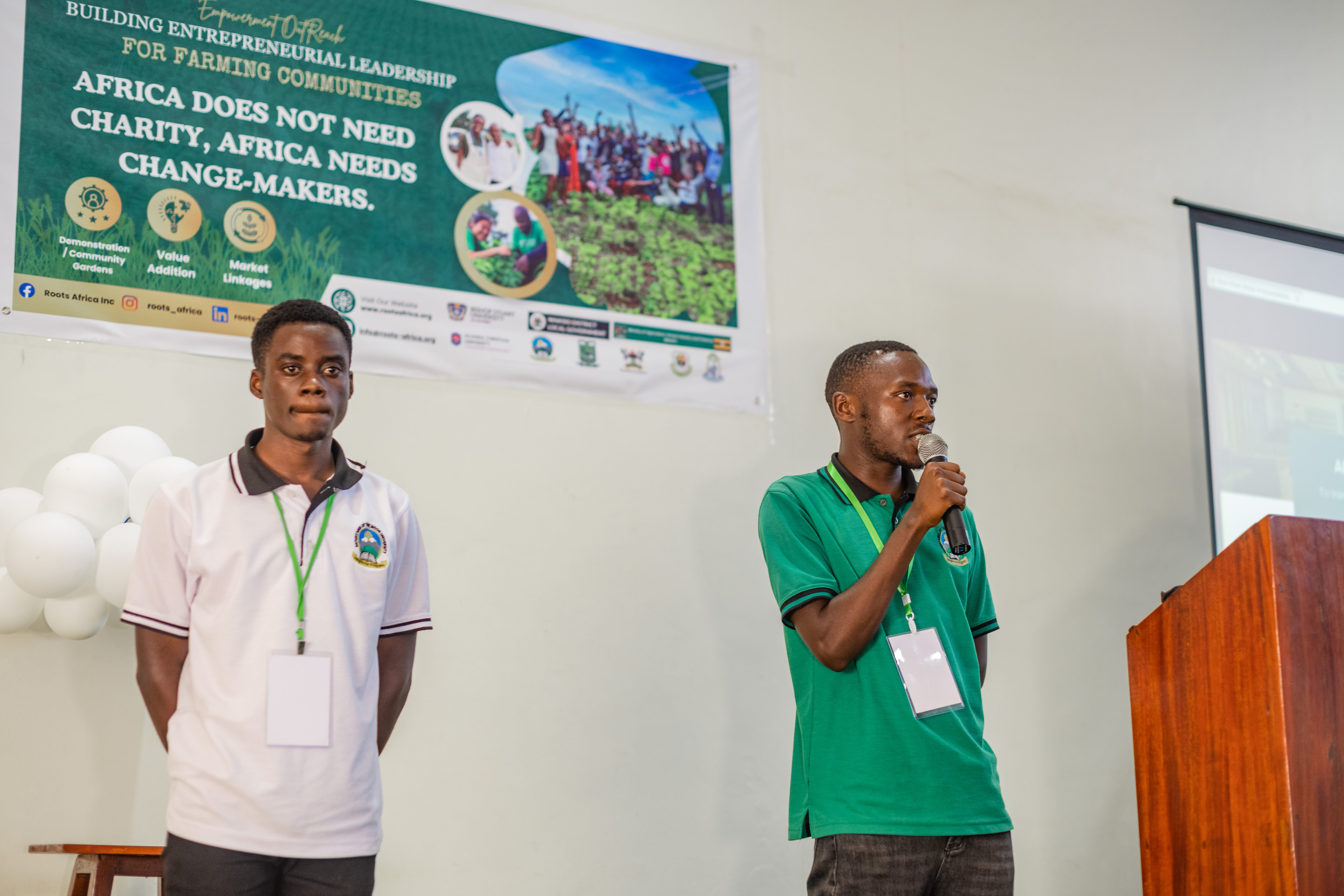
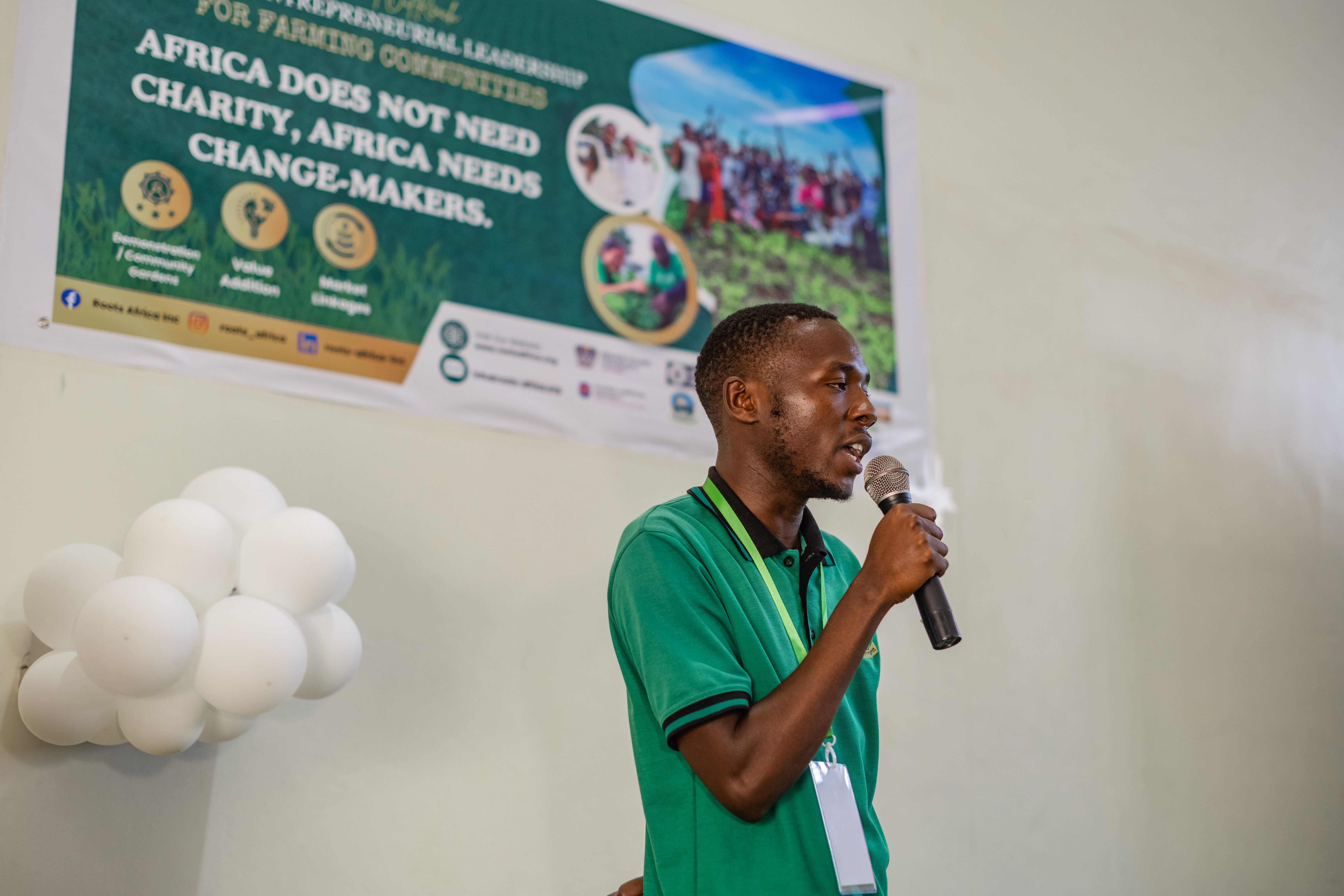
The next morning, Apuuli and Derrick walked onto that stage anyway, raw, nervous, standing in front of a live audience, judges, competitors, and prize money for maybe the first time in their lives. Everything they’d rehearsed the night before seemed to evaporate somewhere between the chair and the microphone. That happens. The stage does something strange to a prepared sentence.
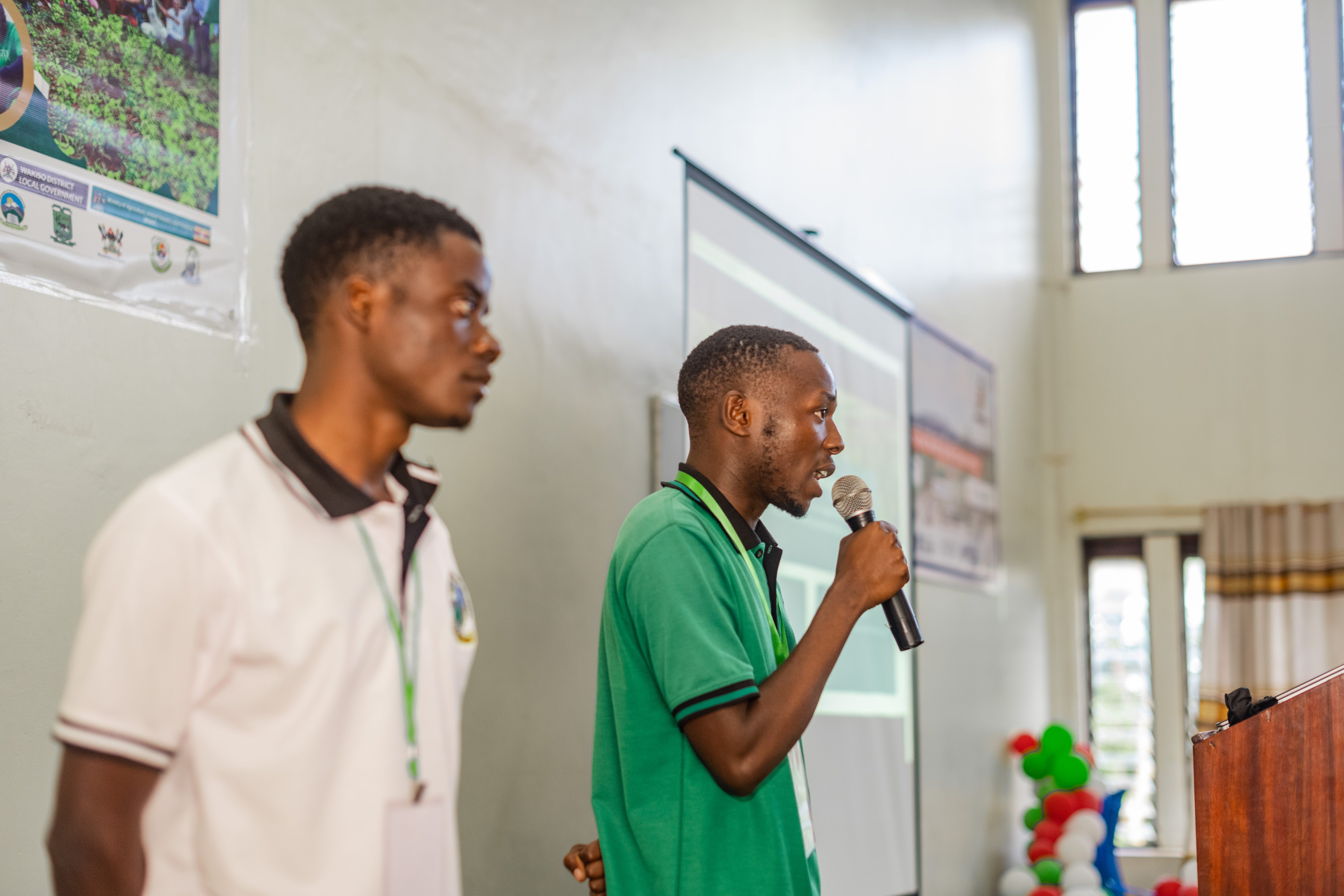
They did their best. Against where they’d started the night before, it was a real leap forward. But if you pulled up the footage today, you’d see exactly what it was: two young people at the very beginning of a professional journey.
That’s not a criticism of the footage. That’s the whole reason the footage matters, because now there’s something to measure it against.
What the footage doesn’t show
Today, Apuuli isn’t the changemaker being coached through stage presence. He’s Roots Africa’s in-country leadership in Uganda, a role he reached by moving through the entire ecosystem the program is built on: changemaker, peer leader, mentor, field leader, and finally someone trusted with real responsibility for the organization’s work on the ground.
And he didn’t stop at leadership inside Roots Africa. Apuuli has built his own venture, an enterprise delivering agricultural extension support, soil-related services, and other practical interventions directly to farming communities.
That’s the actual goal, stated plainly: Roots Africa was never trying to produce someone who got very good at attending Roots Africa programs. It was trying to help build a young African professional who could eventually work without needing Roots Africa at all.
Apuuli Barts Bazira Tadeo
Apuuli founded Abamu Agripreneurs Foundation (also operating as Abamu Agripreneurs Uganda Limited) as a youth-led agricultural enterprise and training initiative based in Fort Portal, Western Uganda, operating prominently in regions like the Bunyangabu District and the foothills of the Rwenzori Mountains.
Mission: To enhance efficiency, quality, and market access for smallholder farmers boosting local incomes and promoting sustainable agroecology while meeting high standards.
Core Focus: Bridging the gap between primary agricultural production and consumers to reduce post-harvest losses, elevate nutrition, and transform raw farming into scalable local enterprise.
Key Activities & Products
Farmer Training & Capacity Building: Has trained hundreds of smallholder farmers (surpassing 500 farmers trained in Bunyangabu District) in modern agronomy, agroecology, value addition, and financial/business literacy.
Value Addition: Known for initiatives like Abamu Bean Flour sourced from beans intercropped with Arabica coffee on the slopes of Mt. Rwenzori providing shelf-ready, nutritious food products and local market linkages through the Abamu Foods and Drinks Hub.
Agricultural Consultancy: Offers professional support services, market access consulting, and community-driven food system resilience strategies.
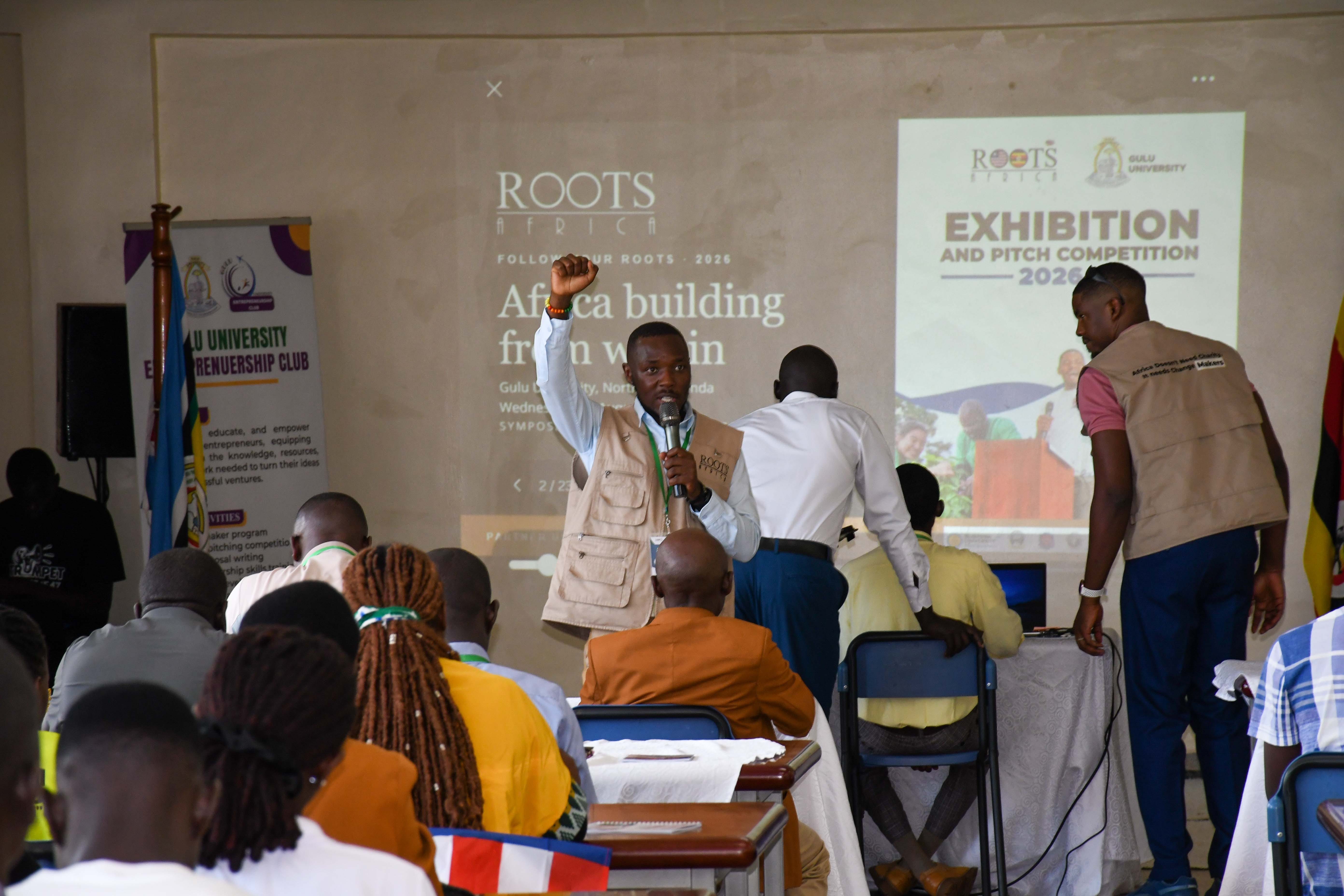
Fast-forward to 2026, inside the auditorium at Gulu University. The Roots Africa Annual Symposium is underway, universities, farmers, partners, changemakers, guests, all in one room. A young man steps up to the microphone, scans the crowd, and settles it with a single easy sentence.

He is not nervous. He is not reading a slide. He is running the room.
His name is Apuuli. He is the Master of Ceremonies.
Two years earlier, he was one of the two young men who could not get through a pitch.
This is the story of what happened in between.
Then there’s Derrick Mugume
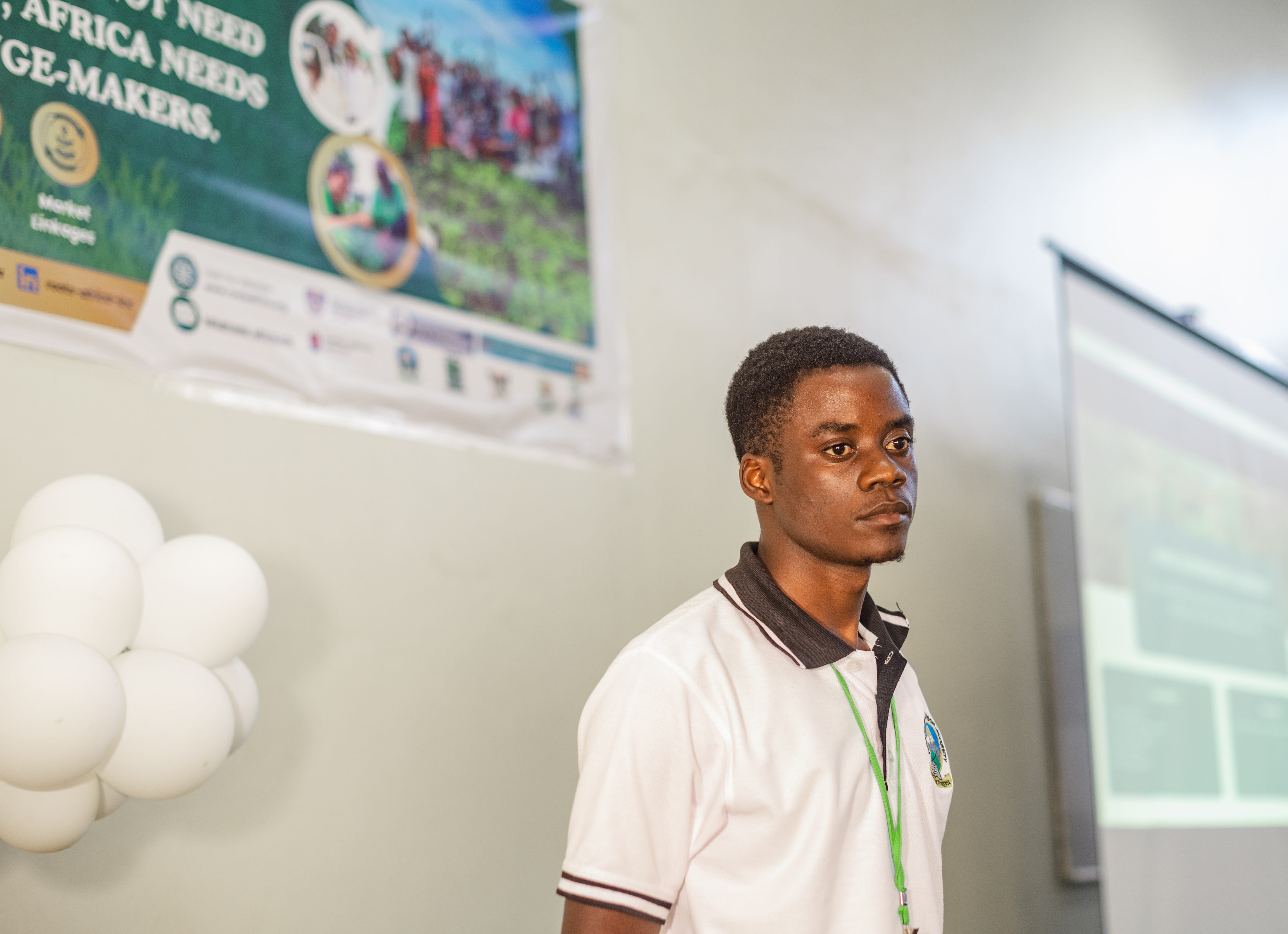
Put his earliest design work next to what he produces now, and you could reasonably ask whether the same person made both. He did. The difference is time, practice, feedback, responsibility, exposure, and somebody who kept saying “try again.”
Derrick grew from a regular Change Makers participant into a serious creative and media professional. His work is now recognized inside Mountains of the Moon University, where he contributes to media and communications. Roots Africa kept creating chances for him to design, document, produce, and tell stories, and he grew into photography, event media, video, even podcast production. Work he shoots and edits in Uganda now travels thousands of miles to audiences who will never meet him.
The young man who once needed help figuring out how to present himself on a stage is now the one helping other people and institutions present themselves to the world.
That’s transformation. Not a certificate. Not a testimonial. An actual, structural change in what someone is capable of doing, and who now depends on them.
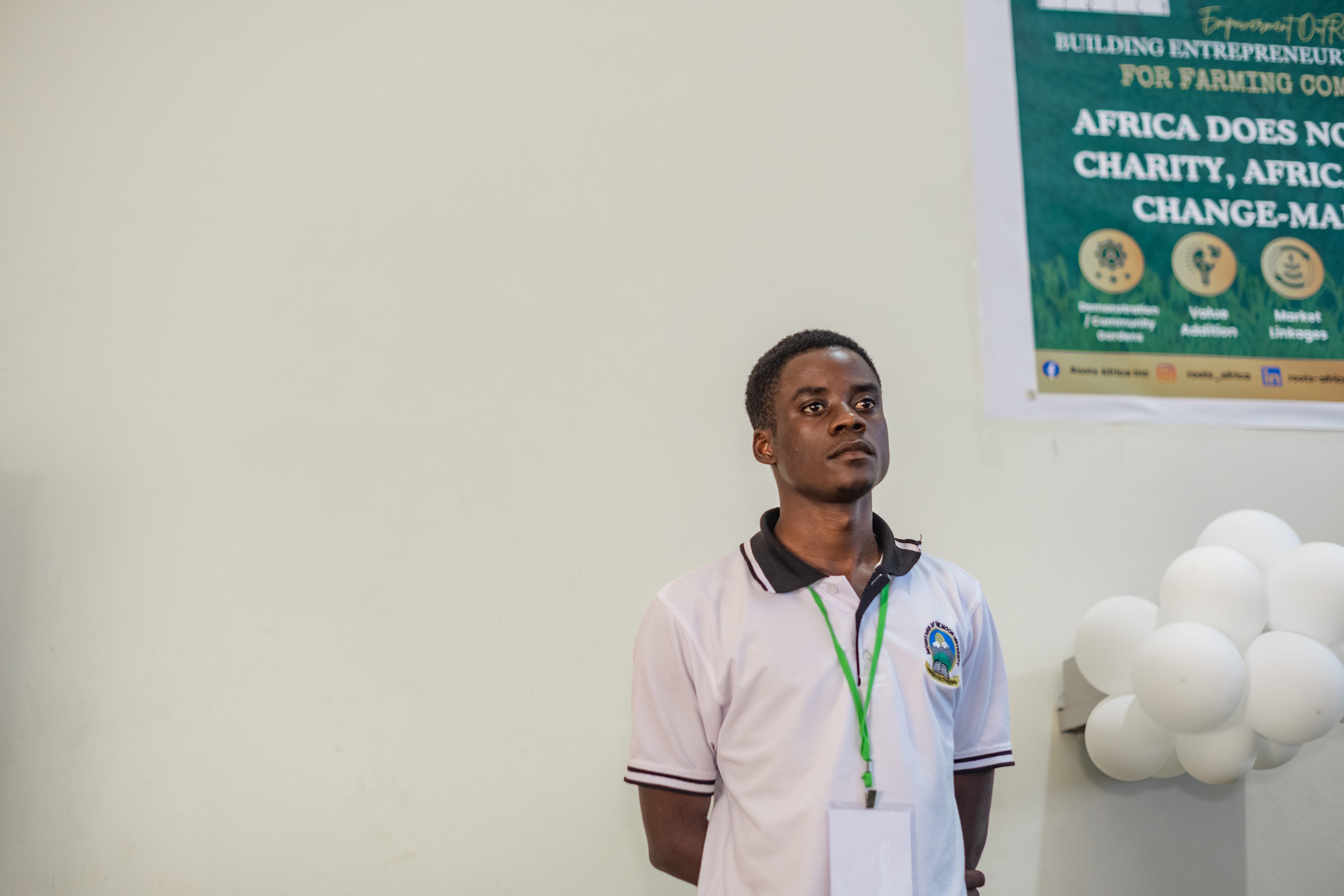
What a “six-month bootcamp” actually is
Say “Changemakers Program” and people picture classes. There are classes. There’s training, mentors, Pods, assignments, community projects, competitions. All real.
But the curriculum that actually changes someone is bigger than the syllabus. It’s the moment someone hands you leadership before you believe you’re a leader. It’s being given responsibility slightly before you feel ready for it. It’s presenting badly, hearing exactly what didn’t work, and presenting again. It’s learning to write an email that gets answered, run a meeting that ends on time, build a budget that survives scrutiny, talk to a farmer and talk to a Vice Chancellor in the same week. It’s managing a project, designing a flyer, collecting real data, absorbing real criticism, pitching an idea, training someone else, and eventually becoming the person who teaches the next changemaker what somebody once had to teach you.

That’s why Roots Africa doesn’t measure transformation by attendance. The question that actually matters is: who did they become?
Discovery. Foundation. Growth. Empowerment. Transformation. The model moves in one direction, toward the organization mattering less. Entering a community by listening. Building a foundation. Growing people through training, mentorship, and responsibility. Empowering them to increasingly own the work. And finally, transformation, the point where Roots Africa is no longer the most important actor in the story.
Apuuli building something of his own is transformation. Derrick becoming valuable to a university on his own merits is transformation. The goal was never to keep them dependent on the program. The goal was to make the program unnecessary to their success.
The person behind the program
Programs get the credit. The hours behind them rarely do. Lets change that shall we!
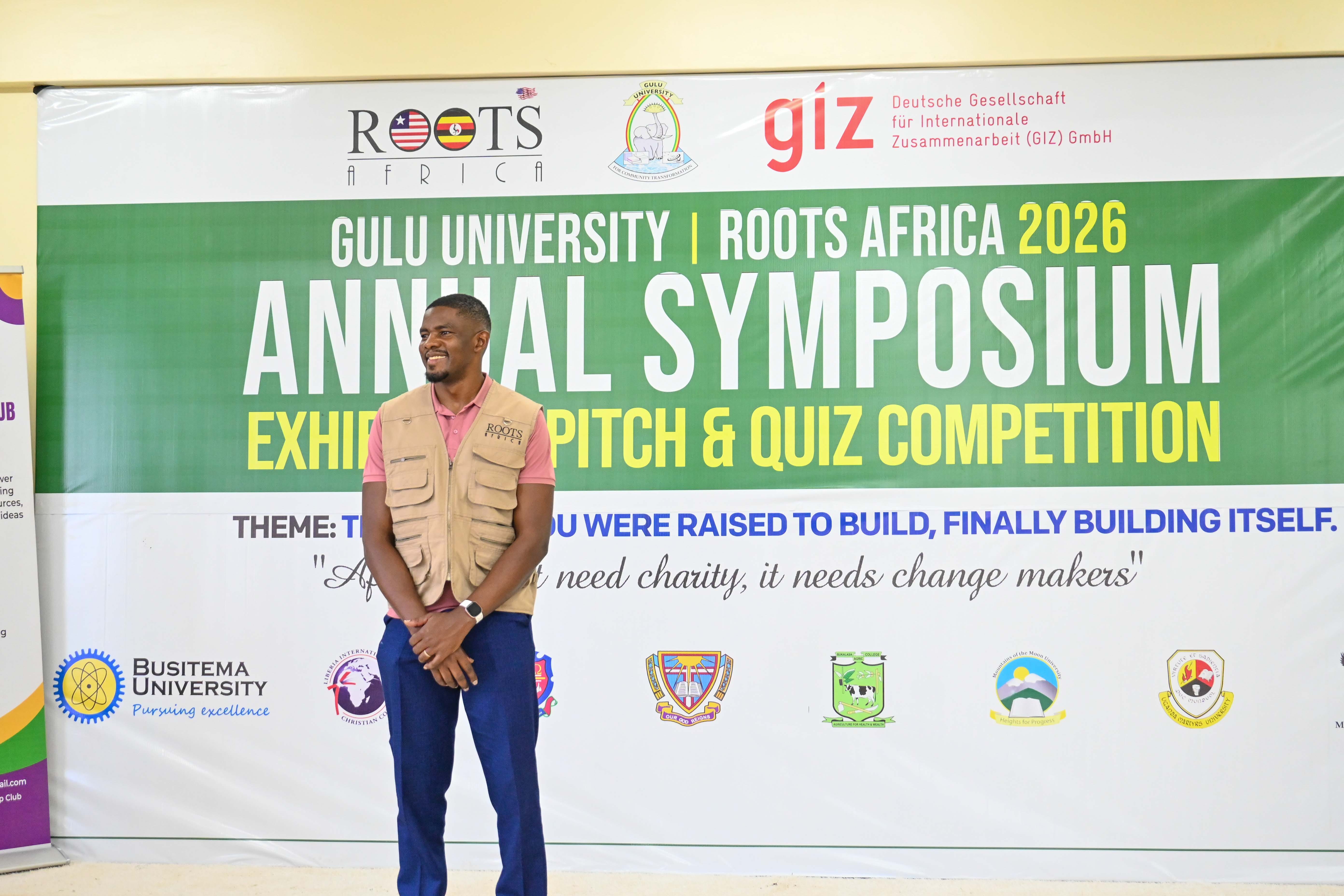
Cedric Nwafor has an unusual eye, not for people who already look polished, but for people who look unfinished and might not stay that way. Spotting someone who already presents like a leader is easy. Looking at an uncertain student, a rough first draft of a person, and seeing who they could be two or three years out, that’s harder. Staying long enough to actually help them get there is harder still.
That looks like: hours of coaching, phone calls, corrected drafts, another assignment, another opportunity, another shot after the last one didn’t land, resources, introductions, paid work, field exposure, and sometimes one uncomfortable sentence: “I know you can do better than this. Try again.”
That’s leadership development. Not a keynote. An investment, made repeatedly, in a person who hasn’t proven the investment will pay off yet.
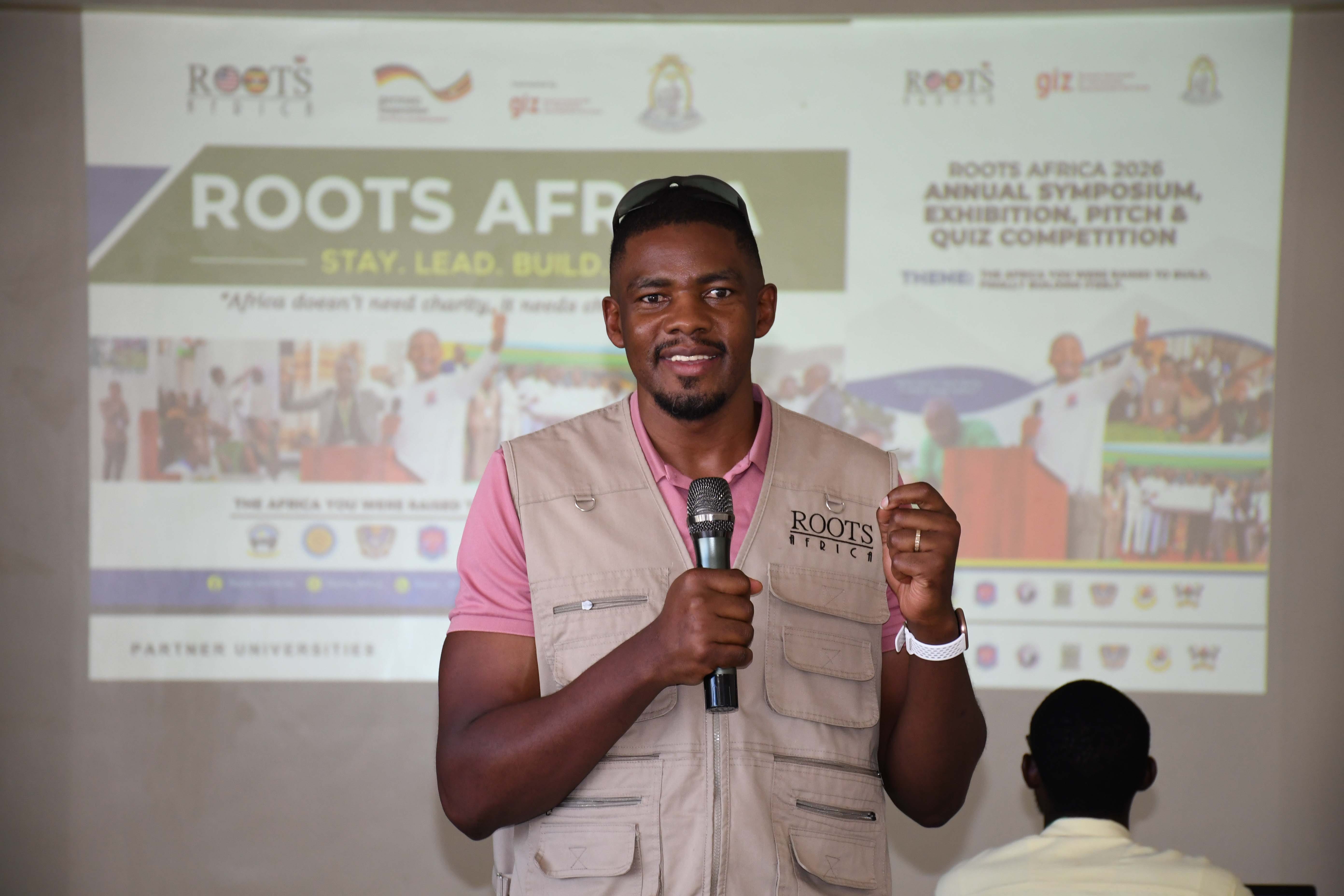
Here is why this story is bigger than two names!
Apuuli and Derrick get the spotlight because their arc is visible, there’s old footage, early designs, an awkward pitch on tape, and now a stage, a portfolio, a title. The before-and-after does the storytelling for you.
But behind them are hundreds of other changemakers whose stories are still being written. Some will build companies. Some will become agricultural extension professionals, researchers, government officers, farm managers, product builders, nonprofit founders. Some will train thousands of farmers. And somewhere in that group, statistically, is someone who will eventually run Roots Africa itself.
That’s the actual bet the organization is making: give us a young person, and give us time.


A $500 award helps. A training session helps. A laptop, a trip, all useful. But none of those things alone produces an Apuuli or a Derrick. People grow when opportunity compounds: training plus mentorship plus responsibility plus failure plus feedback plus exposure plus one more real opportunity, again, and again, and again, until the young person you were preparing for the stage is the one running it.
That’s the story. That’s the work. That’s why the building continues.
Stay. Lead. Build. Africa is building from within.
If you’re someone who could do for one more person what Cedric did for two
You don’t have to rescue anyone. Most of the young people Roots Africa works with in Uganda and Liberia don’t need rescuing. They need to be seen early, by a mentor, a coach, a university, a company, a donor, a manufacturer, an agricultural professional, or simply someone with hard-won experience worth handing down.


Teach them something real. Open one door. Give direct feedback. Let them shadow you. Hand them an actual assignment, not a token one. Invest in the idea they’re too unsure to fully believe in yet. Make an introduction. And then stay around long enough to see what happens.
Because the student struggling through a pitch tonight might be the one running the room two years from now.
📧 info@roots-africa.org 📞 +1 (240) 350-2325
Roots Africa Inc. - Africa Building Itself From Within.